Introduction
If you are visiting a Cardiologist in Mumbai
for a heart stent procedure, it’s natural to wonder what comes next. Recovery after a heart stent is a
critical part of ensuring long-term heart health and avoiding complications. Patients often have
questions about hospital stay, medications, physical activity, and lifestyle adjustments. In this blog,
we cover realistic recovery timelines, what to expect during the hospital stay, tips for returning to
daily life, and how expert guidance at Bombay Hospital Mumbai can help
ensure a smooth recovery.
Immediate Recovery in the Hospital
After the stent placement, patients are closely monitored by specialists in Cardiology. Key aspects of the
immediate recovery include:
- Observation: Nurses and doctors watch vital signs and heart activity. The
catheter insertion site, usually in the wrist or groin, is checked for bleeding or bruising.
- Bed Rest: Short periods of bed rest help ensure proper healing. Most
patients stay in the hospital for 24–48 hours.
- Pain Management: Minor discomfort at the insertion site is common. Pain is
usually controlled with mild medications.
Medications for Recovery
Medications are essential for preventing complications and supporting stent function:
- Antiplatelet Therapy: Drugs like aspirin or clopidogrel prevent blood clots
from forming inside the stent.
- Cholesterol Medications: Statins help prevent plaque buildup in other
arteries.
- Blood Pressure Medications: Keeping blood pressure in check reduces stress
on the stented artery.
Your Cardiologist in
Mumbai will explain dosage schedules, potential side effects, and how to combine
medications with lifestyle changes.
Returning to Daily Activities
Resuming normal activity should be gradual:
- First Week: Light walking and household tasks are encouraged. Avoid lifting
heavy objects or strenuous movement.
- Weeks 2–4: Patients may begin mild exercise like walking or cycling, under
medical guidance.
- Long-Term: Structured cardiac rehabilitation programs offered at Bombay
Hospital Mumbai help patients regain strength, monitor progress, and adopt healthy
exercise
habits.
Patients are advised to observe their body’s response and report any chest pain, dizziness, or
unusual fatigue to their doctor immediately.
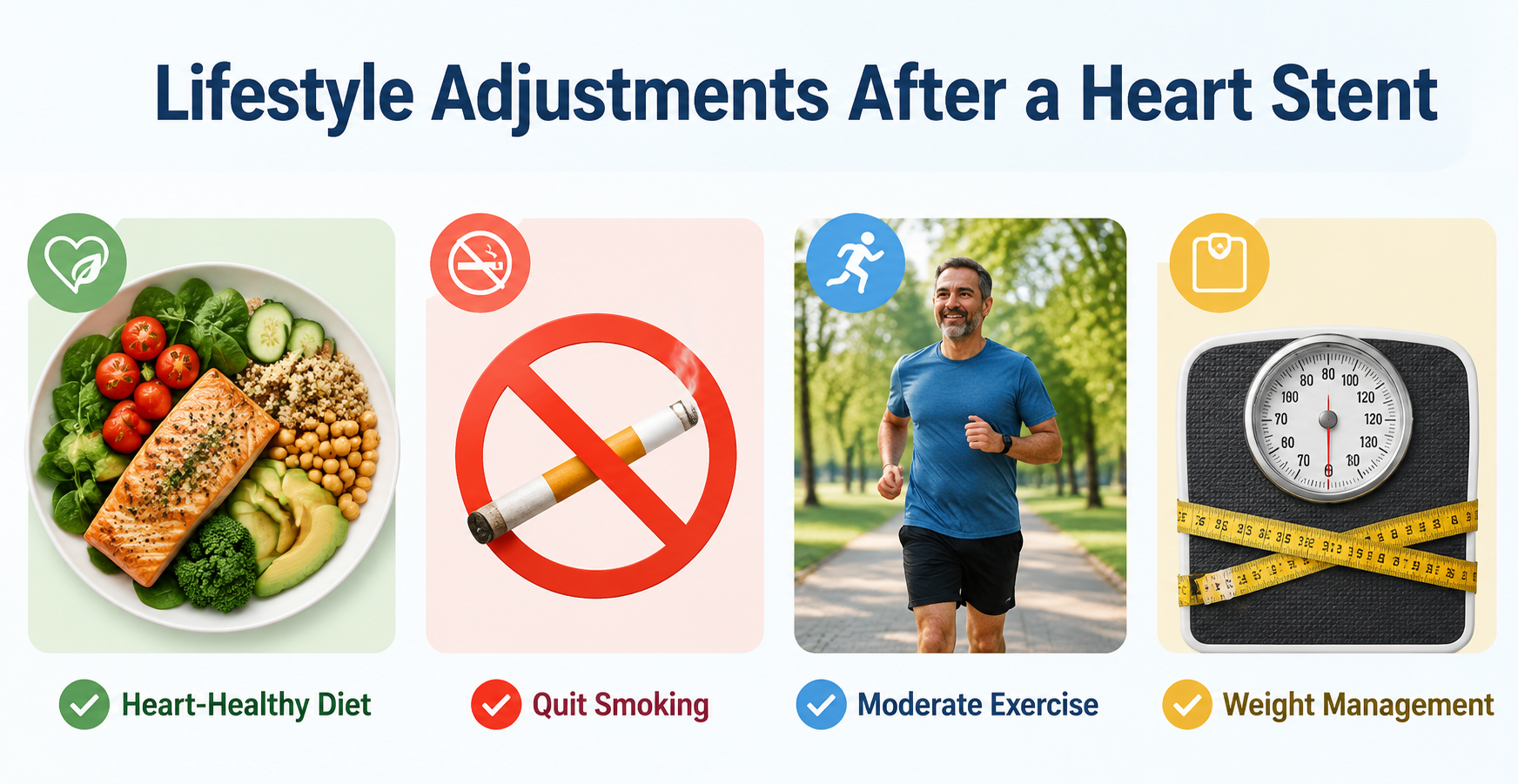
Lifestyle Adjustments After a Heart Stent
Lifestyle changes support heart health and reduce future risks:
- Heart-Healthy Diet: Incorporate fruits, vegetables, lean proteins,
and
whole grains. Limit sodium, sugar, and processed foods.
- Quit Smoking: Tobacco increases the risk of stent blockage and
other
cardiovascular issues.
- Moderate Exercise: Gradual physical activity helps maintain
cardiovascular
health without straining the stent.
- Weight Management: Maintaining a healthy weight reduces stress on
the heart
and improves long-term outcomes.
Monitoring and Follow-Up Care
Consistent follow-up ensures that the stent remains effective:
- Checkups: Regular visits monitor heart function and assess recovery
progress.
- Diagnostics: ECGs, stress tests, or imaging help evaluate stent
performance.
- Symptom Awareness: Chest pain, swelling, shortness of breath, or bleeding
from the insertion site should be reported immediately.
Bombay Hospital Mumbai offers comprehensive follow-up
services, ensuring patients receive
continuous care from top cardiology experts.
Emotional and Psychological Recovery
A heart procedure can affect mental well-being:
- Anxiety Management: Fear about future heart problems is common. Talking
with your Cardiologist in Mumbai or joining patient support groups helps manage stress.
- Confidence Building: Gradually resuming daily activities restores
confidence. Patients often benefit from structured cardiac rehab programs.
- Mental Health Support: Counseling or therapy can be valuable if anxiety or
mood changes persist.
Frequently Asked Questions
Patients generally return to light activity within 1–2 weeks. Full recovery may take
several weeks depending on overall health and procedure complexity.
Driving is usually restricted for a few days. Your cardiologist will provide specific
guidance based on your recovery progress.
Patients should follow a heart-healthy diet with low sodium, low sugar, and adequate
fiber to support recovery and maintain long-term heart health.
Mild walking is encouraged immediately, but structured exercise or heavy workouts should
follow your cardiologist’s instructions, often starting after 2–4 weeks.
Report chest pain, swelling, bleeding, or shortness of breath immediately. Early
intervention reduces risks of stent-related issues.
Conclusion
Recovery after a heart stent involves careful attention to medications, diet, physical activity, and
emotional well-being. Following your Cardiologist in Mumbai’s guidance, attending follow-ups, and
utilizing support services at Bombay Hospital Mumbai can help
you
regain strength safely.
Understanding the recovery process empowers you to make informed choices, regain independence, and
maintain long-term heart health.