Introduction
Managing kidney disease goes beyond taking medicines — what you eat and when you eat directly affects
how your kidneys function. Meal planning helps you make better food choices, manage symptoms, and
protect your kidney health. For many patients living with Chronic Kidney Disease (CKD) or those on
dialysis, eating without a plan can lead to confusion, frustration, and health setbacks.
In this blog, you’ll learn practical tips to plan kidney-friendly meals you can follow every day. You’ll
also find guidance on key nutrients, portion control, food swaps, and ways to reduce worry around
mealtime. If you or someone you care for has been diagnosed with kidney issues, this guide, created with
insights from experts at Bombay Hospital Mumbai, will help you
take
control of your diet.
Why Meal Planning Matters for Kidney Health
Your kidneys filter waste from your blood, balance electrolytes, and control fluid levels in
your body. When kidney function declines, too much sodium, potassium, phosphorus, or protein in
your diet can make your condition worse. Consulting with a nephrology specialist and planning
meals ahead gives you clarity, reduces guesswork, and supports better health over time.
A customized kidney diet can:
- Reduce fluid retention and swelling
- Help maintain stable blood pressure
- Prevent dangerous electrolyte imbalances
- Support energy levels throughout the day
By understanding what to include — and what to limit — as recommended by your nephrologist,
you
can relax at mealtime and avoid stress.
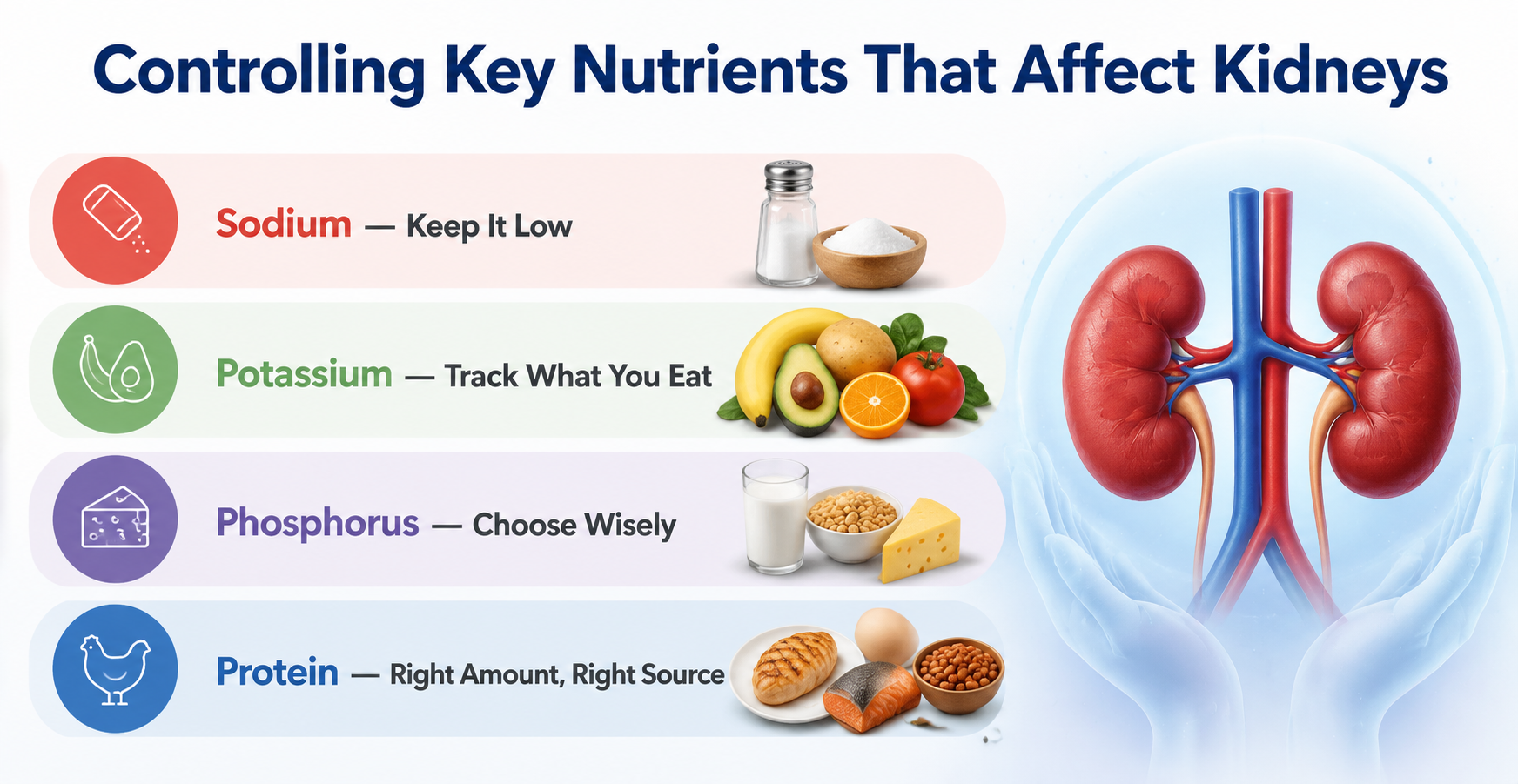
Controlling Key Nutrients That Affect Kidneys
Following a kidney-friendly diet means paying attention to a few major nutrients. Each one has a
role in how your kidneys work.
Sodium — Keep It Low
Too much sodium leads to fluid retention and higher blood pressure. To cut sodium:
- Avoid adding salt at the table
- Choose fresh food over canned or processed versions
- Read food labels and pick “low sodium” products
- Use spices like cumin, coriander, or turmeric for flavor
Aim for less than 2,000 mg of sodium per day unless your nephrologist in
Mumbai
gives a
different target.
Potassium — Track What You Eat
Potassium helps muscles and nerves work, but too much can be harmful for CKD patients. Foods
higher in potassium include bananas, potatoes, and tomatoes. Lower-potassium choices include
apples, berries, and cauliflower.
Simple idea: soak cut vegetables in water before cooking to reduce potassium.
Phosphorus — Choose Wisely
Phosphorus is often added to packaged foods and can build up in the blood when kidney function
declines. High phosphorus may weaken bones over time.
Better options:
- Fresh meats instead of processed meats
- Clear label reading — avoid ingredients that end in “-phosphate”
- Use a phosphorus binder only if your doctor prescribes one
Protein — Right Amount, Right Source
Protein helps your body repair tissue, but too much can strain kidneys. Talk with your
nephrology team about how much protein is right for you.
Better protein choices include:
- Lean chicken, fish, or eggs
- Limit high-protein shakes or supplements unless advised
- Spread protein evenly across meals
How to Balance Your Plate Everyday
Putting together a meal plan doesn’t have to be complicated. Use a simple pattern to build
meals:
Plate structure (easy to follow):
- 1/2 plate: Vegetables (low-potassium)
- 1/4 plate: Quality protein
- 1/4 plate: Carbohydrates (rice, chapati, pasta)
- Add a small fruit or snack that fits your dietary targets
Example meal plan (kidney-friendly):
- Breakfast: Poha made with minimal salt, Apple slices, Herbal tea (no added
sugar)
- Lunch: Steamed rice, Grilled chicken, Steamed beans with lemon
- Snack: Unsalted crackers or papaya chunks
- Dinner: Vegetable upma, Boiled egg, Cucumber salad
This layout helps you control sodium, potassium, and protein naturally.
Simple Shopping and Cooking Habits
Meal planning starts at the grocery store. Use these tips to avoid unhealthy foods:
- Buy fresh produce instead of cans
- Choose plain rice or grains
- Avoid packaged snacks with long ingredient lists
- Stick to spices and herbs instead of salty seasonings
In the kitchen, measure ingredients so portions stay consistent. Pre-portion meals into
containers so healthy meals are ready when hunger hits.
Hydration — How Much Is Right?
Your fluid needs depend on your kidney function and treatment plan. Some patients need to limit
water intake; others need moderate fluids.
To manage fluid intake:
- Sip water rather than gulping
- Track fluids in a small notebook or app
- Include foods with water (like soups or rasam) but count them as fluid
Always follow the exact instructions your nephrologist in Mumbai gives you about
hydration.
Booking a consultation with a kidney specialist or diet
expert at the right time can make food
planning simpler and more effective.
Frequently Asked Questions
Yes, but choose fruits that fit your potassium limit. Apples and berries are generally
safer options than bananas or oranges for many patients.
Use fresh herbs, citrus juice, garlic, and mild spices instead of salt.
Yes. Rice is low in potassium and phosphorus, making it a good carbohydrate choice when
portion sizes are measured.
Yes. Soups, stews, and rasam all count toward your daily fluid intake if you are on
fluid restriction.
Check-ups depend on your stage of kidney disease. Your
nephrologist in Mumbai will
advise how often you should visit based on lab results and symptoms.
Conclusion
Meal planning doesn’t need to be stressful. With a clear routine, smart food choices, and support
from your healthcare team, you can enjoy balanced meals while keeping your kidneys in better health.
Start small, track your choices, and reach out for professional guidance when you need it — your
diet can be one of your strongest tools in managing kidney disease.