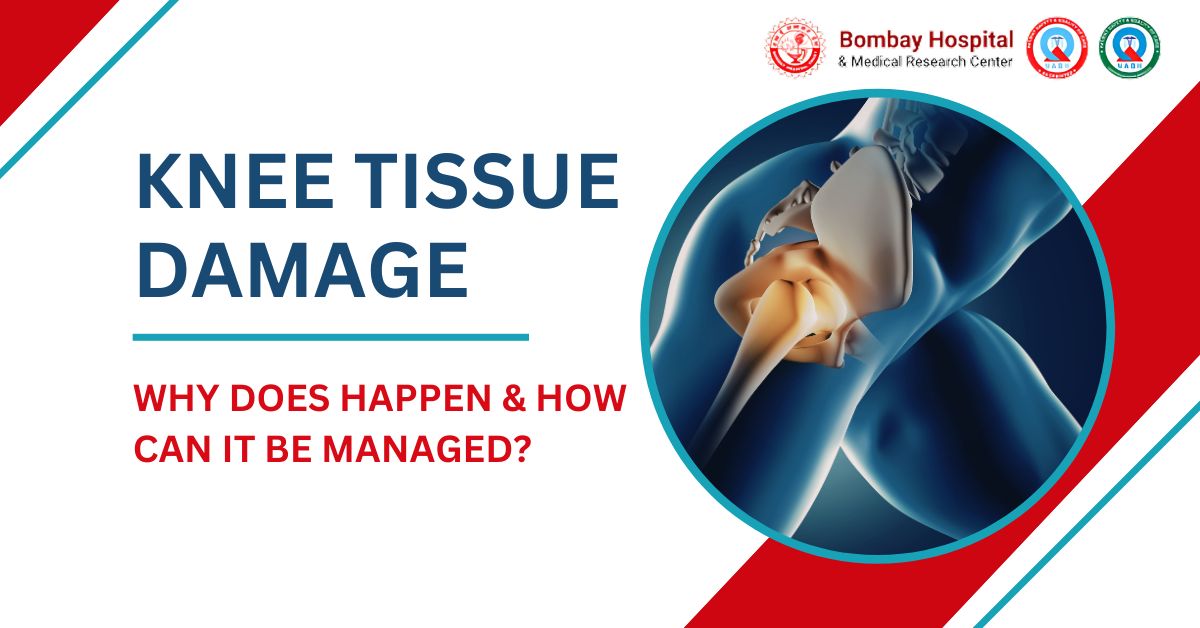
Have you ever felt sharp pain in your knee when walking downstairs, or noticed swelling after a long
walk around Mumbai’s busy streets? Knee tissue damage is more common than most people realize. Whether
you work at a desk in Powai, jog along Marine Drive, or spend long hours on your feet at work, your
knees carry stress every day. Understanding why knee tissue damage occurs and how it can be managed
helps you protect your mobility and maintain an active life.
In this blog, we will explain the causes of knee tissue damage, the symptoms to watch for, how it is
diagnosed, treatment options available in 2026, practical steps you can take at home, and how expert
care at Bombay Hospital, Mumbai can make a real difference in
restoring your knee health and mobility.
What Causes Knee Tissue Damage?
Knee tissue damage usually affects the cartilage, ligaments, tendons, or muscles that
support
the joint. Your knee’s stability and movement depend on these tissues working together
smoothly,
and seeking care from an experienced orthopedic in Mumbai can
help ensure
proper diagnosis and effective treatment.
1. Sudden Injuries
One of the most common causes is an unexpected injury. You
might:
- Twist your knee during sports like football in Mumbai’s local leagues.
- Slip while stepping off a footpath.
- Get hit in a fall or accident.
These events can tear ligaments such as the ACL (anterior
cruciate ligament) or the meniscus (the shock‑absorbing cartilage). You may hear a pop or feel
sudden instability.
2. Wear and Tear
Not all damage comes from sudden accidents. Over years of
walking, stair climbing, and repetitive movement, your knee tissues can degrade. As people age,
the cartilage that cushions the joint becomes thinner and less resilient. This process is
especially noticeable in:
- People over 40
- Individuals with long hours of walking or standing
- Those with a history of minor knee injuries
Arthritis is a classic example of wear‑and‑tear knee damage
that gradually limits mobility.
3. Inflammation from Medical Conditions
Certain diseases trigger inflammation that harms tissues:
- Rheumatoid arthritis attacks joint tissue directly.
- Gout leads to uric acid crystals forming in the knee joint.
- Autoimmune conditions can affect multiple joints, including knees.
These conditions don’t always follow injury patterns and can
flare up without warning.
4. Repetitive Stress and Overuse
Even everyday activities can create stress. Running long
distances, cycling without proper form, frequent squatting, or heavy lifting can strain muscles
and tendons. Over months and years, this stress accumulates, leading to tendonitis or cartilage
breakdown.
How to Recognize the Symptoms
Identifying knee tissue damage early means you can act before the problem becomes chronic. Ask
yourself:
- Do you feel pain while bending or straightening your knee?
- Is there swelling after activity?
- Does the knee feel unstable or like it might give way?
- Do you hear clicking or grinding sounds when moving?
- Are you experiencing stiffness first thing in the morning?
Any of these should prompt a closer look, especially if symptoms last more than a few days.
How Knee Tissue Damage Is Diagnosed in Mumbai
Diagnosis starts with a detailed consultation. In Mumbai, orthopedic
specialists begin with your
history and activities. Common steps include:
Physical Examination
A doctor observes how you walk, bends your knee, and checks for
tenderness or swelling.
Imaging Tests
- X‑rays reveal bone alignment and signs of arthritis.
- MRI scans show soft tissue such as ligaments and cartilage.
Modern centres in Mumbai use digital imaging to make diagnosis
accurate and quick.
Arthroscopy
In some cases, a small scope is used to examine the inside of
the knee directly. This minimally invasive method helps with both diagnosis and treatment.
Treatment Options: From Simple Care to Specialized Care
Let’s break down how knee tissue damage can be managed depending on severity.
Non‑Surgical Management
Many knee problems improve with conservative care:
- Rest and Protection: Avoid putting weight on the knee for
short periods when swollen or painful.
- Physical Therapy: Guided exercises strengthen weak muscles
that support the knee. A physiotherapist in Mumbai can help design a routine that fits your
lifestyle.
- Pain Relief Medications: Your doctor may recommend medication
to manage inflammation and pain while healing occurs.
- Braces and Supports: For mild instability, a knee brace can
keep the joint aligned during movement.
Regenerative Therapies
Innovative treatments now available in Mumbai aim to help
tissue heal rather than just mask pain:
- Platelet‑Rich Plasma (PRP) Injections: A small amount of your
own blood is processed and injected into the injured area to encourage healing.
- Stem Cell Treatments: These are being used selectively under
expert supervision to support cartilage repair.
These options are best discussed with a specialist.
Surgical Interventions
Surgery may be recommended when damage is significant or if
non‑surgical methods fail:
- Arthroscopic Repair: Small instruments are used to fix tears
in ligaments or cartilage.
- Ligament Reconstruction: Severely torn ligaments like the ACL
may require reconstruction using grafts.
- Partial or Total Knee Replacement: For extensive arthritis or
irreparable damage, replacement surgery can restore function.
Advanced medical centres in Mumbai perform these procedures
with precision and follow structured rehabilitation protocols.
How You Can Protect Your Knees Every Day
You play a major role in preventing future knee problems. Here’s what you can do:
- Maintain a Healthy Weight: Every extra kilogram adds stress to
your knees. Losing even a small amount can ease pressure.
- Choose Smart Workouts: Low‑impact activities such as walking
in Bandra Bandstand, pool exercises, or cycling can keep you fit without overloading the
knee.
- Strength Training: Focused exercises for the quadriceps and
hamstrings improve knee stability.
- Warm Up Before Strenuous Activity: A brief stretch routine
prepares joints for movement.
- Wear Proper Footwear: Shoes that fit well and support your
feet help align your knees correctly during walking or exercise.
These simple steps make everyday movement safer and more comfortable.
If your knee pain lingers, gets worse, or stops you from doing the activities you enjoy, it’s
time to consult an expert. For comprehensive care, Bombay
Hospital, Mumbai, offers specialized orthopedic treatments, advanced diagnostics, and
personalized management plans to help you restore knee function and stay active.
To book a consultation, call or email the hospital’s helpdesk. Discuss your symptoms, get a
precise diagnosis, and begin a treatment plan tailored for you.
Frequently Asked Questions
If pain lasts more than a week, especially with swelling or instability, see a
specialist to avoid worsening the damage.
Yes, many mild to moderate injuries respond well to rest, physiotherapy, and guided
rehabilitation.
Walking at a comfortable pace strengthens muscles without overloading the joint. Avoid
painful or long walks until evaluated.
Surgery aims to correct the problem, but proper rehab and muscle strengthening are
essential for long-term results.
Foods rich in protein, omega-3 fats, and vitamins support tissue repair and reduce
inflammation. Talk to a nutrition expert for guidance.
Conclusion
Knee tissue damage can affect your mobility and daily life, but understanding its causes and
treatment options gives you control. Simple lifestyle changes, early diagnosis, and professional
care in Mumbai can help you protect and restore knee function. Your knees support every step you
take—make today the day you take care of them.