Introduction
Have you noticed trouble hearing in noisy places or asked people to repeat themselves often? Hearing
loss can be frustrating and confusing. One condition that causes this is otosclerosis, a change in the
bones of the middle ear that can reduce sound clarity. Understanding what otosclerosis is, how it
affects hearing, and what your options are helps you take control of your ear health. The ENT department
can help identify such issues early and guide you through the best treatment. This blog looks at the
symptoms, causes, diagnosis, and treatment choices for otosclerosis so you know what steps to take next.
What is Otosclerosis
Otosclerosis is a condition where the bone around the tiny ear bones in your middle ear becomes
harder and less mobile. The middle ear contains three small bones. These bones carry sound from
your eardrum to your inner ear. When the bone around the stapes, the smallest of these bones,
becomes stiff, it stops vibrating normally. Sound cannot pass through as easily, and your
hearing becomes muffled. Most patients feel this slowly over time, not suddenly.
People usually notice hearing issues in one ear first, and often it develops in both ears as
time passes. The exact reason why this happens is not fully known, but an ENT specialist
can
help identify the factors that may play a role.
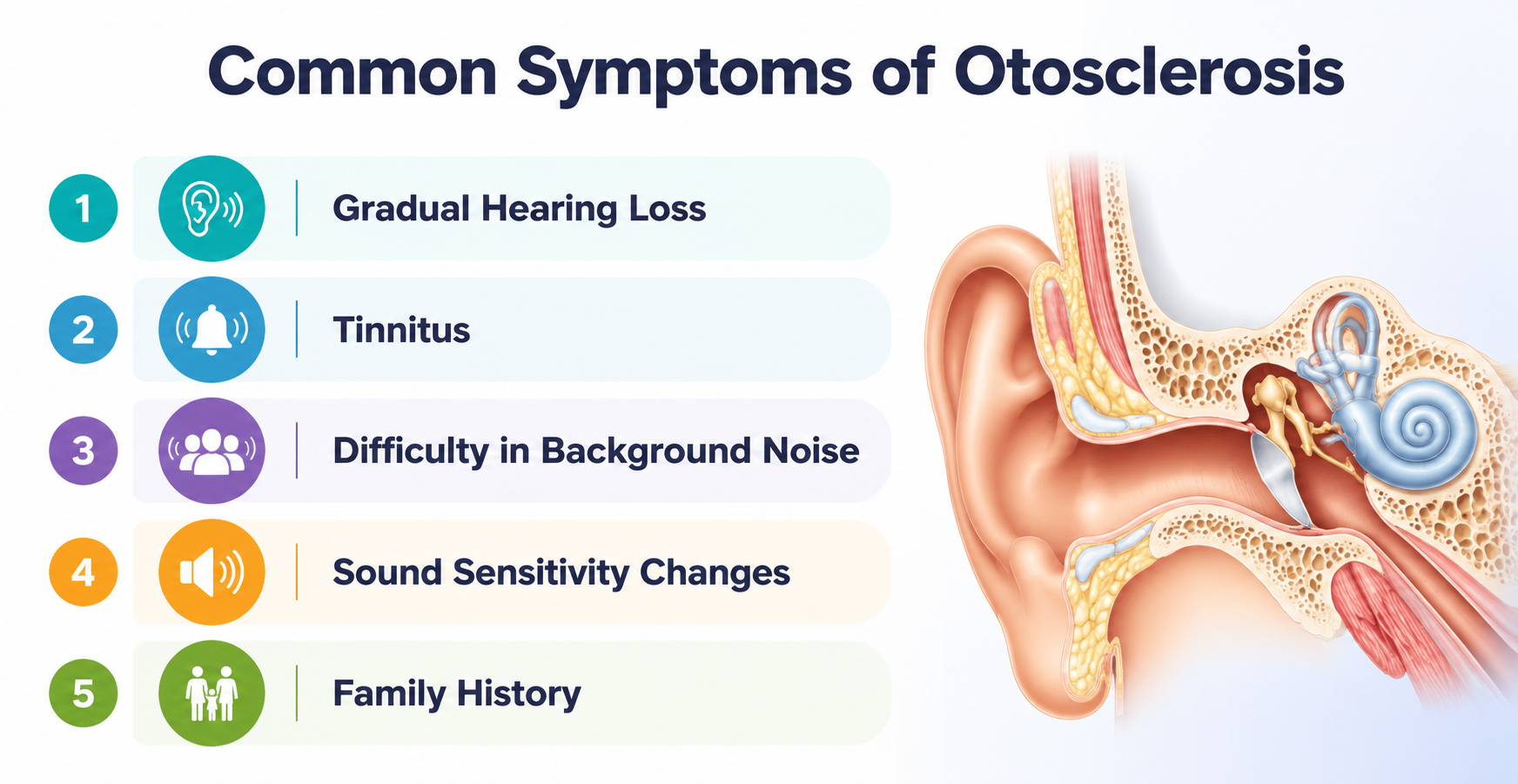
Common Symptoms of Otosclerosis
Otosclerosis tends to appear slowly. You might not realize changes until they affect daily
life. Watch out for these signs:
- 1. Gradual Hearing Loss: The most common symptom is slow hearing
loss. You
may notice it first in quiet settings or only on one side. Conversations in groups
may
become hard to follow.
- 2. Tinnitus: Tinnitus means ringing, buzzing, or hissing in the
ear. This
can happen with or without hearing loss. Many people with otosclerosis report these
sounds
more at night or in silence.
- 3. Difficulty in Background Noise: You might still hear well in
quiet
rooms, but once background noise rises, words become blurred. You end up relying
more on lip
reading or focusing extra hard.
- 4. Sound Sensitivity Changes: Some people find loud sounds feel
stronger or
different. This change happens because the normal ear mechanics are affected.
- 5. Family History: If a close relative has had hearing loss due to
otosclerosis, your risk is higher. This does not mean you definitely will have it,
but it
increases your chances.
What Causes Otosclerosis
Otosclerosis does not happen overnight. Researchers point to a combination of factors that
contribute:
Genetic Factors
Otosclerosis often runs in families. If your parents or siblings experienced similar hearing
loss, this increases the possibility that your ear bones may change shape over time.
Viral and Immune Factors
Some studies link past viral infections, like measles, to the development of otosclerosis. In
some patients, the immune response may affect bone growth in the ear.
Hormonal Influence
Otosclerosis appears more often in women, especially during pregnancy or hormonal changes.
Hormones can impact bone metabolism and may speed up the condition.
Age and Other Elements
Otosclerosis typically begins in early adulthood, often between ages 20 and 40. Minor trauma to
the ear or other local factors might also play a role.
How Otosclerosis is Diagnosed
If you notice persistent hearing changes, an ENT specialist at Bombay Hospital Mumbai can help determine the cause.
The process may include:
- Hearing Tests (Audiometry): These tests measure how well you hear different
tones and volumes. You will wear headphones and respond to sounds you hear. The results show
whether hearing loss is present and what type it is.
- Middle Ear Function Check: Tests like tympanometry assess how well your
eardrum and middle ear bones move. Limited movement suggests a problem in the middle ear.
- Imaging: In some cases, a CT scan of the ear is done. This offers a clear
view of the bone structure and helps your doctor confirm otosclerosis.
These steps are painless, noninvasive, and usually completed in one or two visits. Early
diagnosis means you can choose the right treatment without delay.
Treatment Options
Treatment for otosclerosis depends on how much your hearing is affected and what you want from
your listening ability. A specialist at Bombay Hospital
Mumbai can explain options that fit your
lifestyle.
Hearing Aids
For many people, hearing aids are the first line of treatment. Modern digital aids are smaller,
connect to phones, and adjust sound automatically. They do not cure otosclerosis, but they help
you hear conversations and daily sounds clearly without surgery.
Medications
There are no medicines that reverse otosclerosis, but certain supplements may slow bone changes
in specific cases. Your doctor will decide if this is appropriate for you.
Surgery
If hearing loss is significant, surgery may be recommended. The most common surgery for
otosclerosis is a stapedectomy. In this procedure, the surgeon removes part of the affected
stapes bone and replaces it with a tiny prosthetic piece. This restores movement and helps sound
reach the inner ear.
Most patients experience notable hearing improvement after this surgery. Recovery is usually
quick, and many return to normal activities within a few days. Your surgeon will explain what to
expect based on your health.
Regular Monitoring
If your hearing loss is mild, you might choose to monitor it over time. Regular check-ups help
your doctor watch for changes and adjust treatment as needed.
Living with Otosclerosis
Living well with otosclerosis means combining medical care with practical daily strategies:
- When talking with someone, face them directly so you can read lips and expressions.
- Reduce background noise where possible, especially in meetings or gatherings.
- Protect your ears from loud sounds like fireworks, concerts, or heavy machinery.
- Keep regular appointments with your ENT specialist or hearing care professional.
- Try hearing apps or assistive listening devices if you struggle in specific settings.
These simple steps help you stay connected and confident in conversations.
If you are experiencing hearing changes, seeing an ENT specialist in Mumbai at Bombay Hospital
Mumbai can help you get the right diagnosis and treatment plan. The ENT department
offers
focused care for hearing loss, ear conditions, and surgical options.
Frequently Asked Questions
Yes. Otosclerosis usually progresses slowly. Hearing may change gradually, so regular
check-ups help you stay ahead of changes.
Otosclerosis itself rarely causes pain. Most patients feel reduced hearing or ringing
rather than discomfort.
It is uncommon in children. The condition often begins in early adulthood, but family
history may increase risk.
Hearing aids improve hearing clarity but do not cure the underlying bone changes. They
help you function better in daily life.
Surgery offers long-term improvement for many patients. Hearing aids remain a good
option, especially when surgery is not suitable.
Conclusion
Otosclerosis affects your ability to hear, but understanding it helps you make clear choices. If you
notice changes in your hearing, seeing an ENT specialist early gives you better options. Diagnosis,
proper treatment, and daily strategies support better ear health and communication. With the right
care at places like Bombay Hospital Mumbai, you can manage
otosclerosis and stay connected to the world around you.