Tobacco use remains one of the leading causes of preventable illnesses in India. Every year, World No
Tobacco Day reminds us of the serious consequences smoking and other forms of tobacco can have on our
lungs. If you live in Mumbai, understanding how tobacco affects your respiratory system is particularly
important, given the city’s dense population and high exposure to air pollutants. Pulmonary medicine
experts at Bombay Hospital Mumbai often see patients suffering from
tobacco-related lung conditions,
highlighting the importance of awareness and prevention. In this blog, we will explore the effects of
tobacco on the lungs, common diseases, and preventive measures.
How Tobacco Affects Your Lungs
Tobacco smoke contains thousands of chemicals, including nicotine, tar, and numerous
carcinogens. These substances damage lung tissue, reduce oxygen absorption, and weaken your
immune response. Over time, inhaling tobacco smoke can cause chronic inflammation, scarring, and
narrowing of the airways. Even occasional smoking or chewing tobacco contributes to lung damage,
making it harder to breathe and increasing susceptibility to infections.
When you smoke, tar deposits in the lungs create a layer that reduces the lungs’ natural ability
to filter harmful particles. Nicotine narrows blood vessels and reduces oxygen delivery, which
can worsen pre-existing conditions like asthma or bronchitis. Studies from Indian hospitals
show that long-term smokers are significantly more likely to develop serious lung diseases
compared to non-smokers.
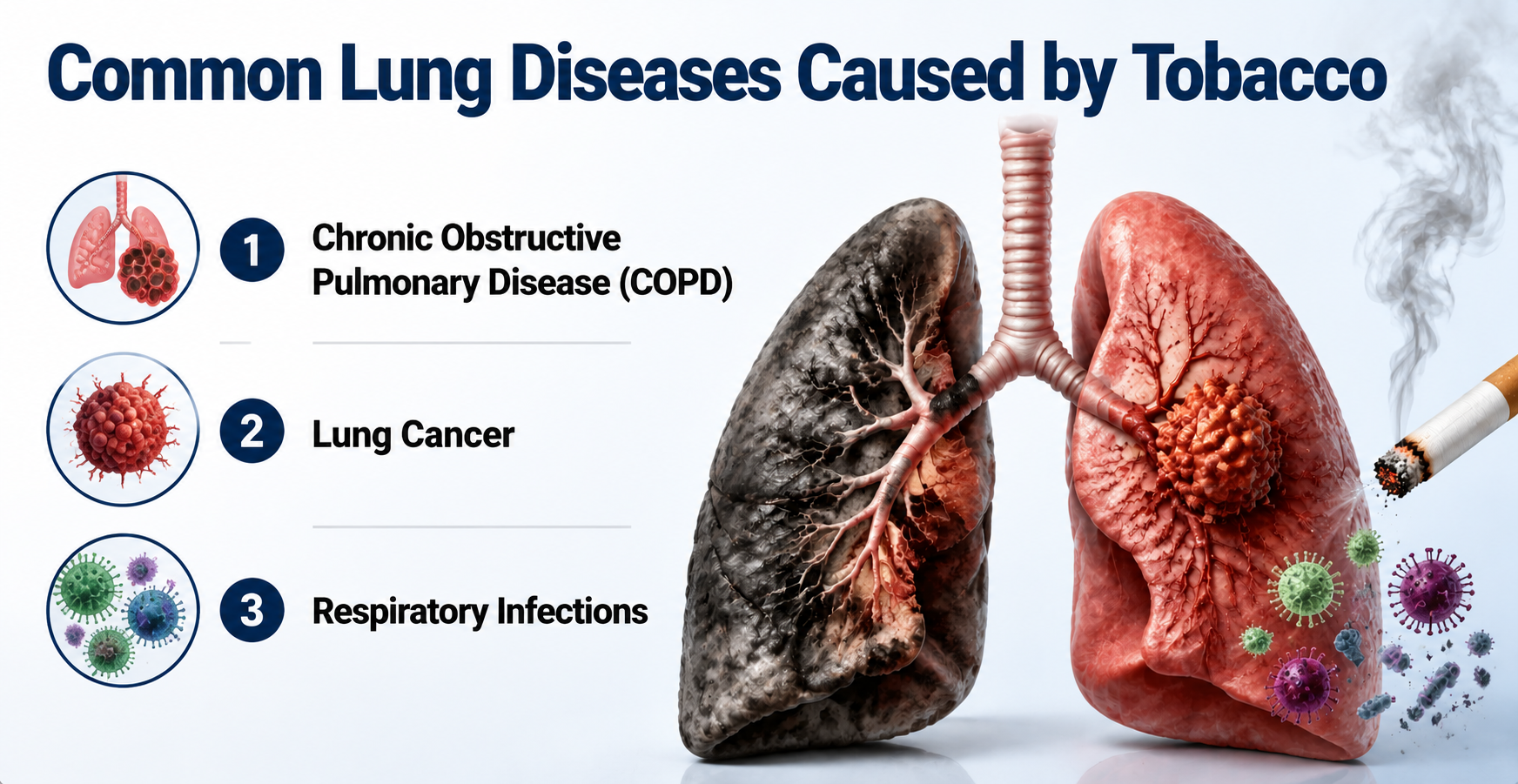
Common Lung Diseases Caused by Tobacco
1. Chronic Obstructive Pulmonary Disease (COPD)
COPD is a progressive lung condition that includes chronic bronchitis and emphysema.
Tobacco smoke irritates the airways, causing persistent coughing, mucus production, and
shortness of breath. Patients in Mumbai often report struggling with daily activities
like climbing stairs or walking long distances due to reduced lung capacity. While COPD
cannot be fully reversed, quitting tobacco and consulting a Pulmonologist
in
Mumbai can slow its progression.
2. Lung Cancer
Smoking is the primary cause of lung cancer in India. Carcinogens in tobacco can alter
DNA, leading to uncontrolled cell growth. Early symptoms are often subtle, such as a
persistent cough, chest discomfort, or unexplained weight loss. Regular screenings, like
low-dose CT scans available at Bombay Hospital
Mumbai, are crucial for early detection
and improving survival rates.
3. Respiratory Infections
Tobacco weakens lung defenses, making it easier for viruses and bacteria to cause
infections such as pneumonia and tuberculosis. Mumbai residents, particularly those
living in crowded areas, are at higher risk due to frequent exposure to polluted air and
secondhand smoke. Preventive measures and timely consultation with a pulmonologist can
reduce infection rates.
Secondhand Smoke and Lung Health
Even if you don’t smoke, exposure to secondhand smoke is harmful. Non-smokers inhale carcinogens
and toxic chemicals present in tobacco smoke, increasing the risk of asthma, bronchitis, and
decreased lung function. Children and the elderly are especially vulnerable. In Mumbai’s
high-density housing and offices, secondhand smoke remains a serious health concern. Creating
smoke-free homes and workplaces is a practical step toward protecting loved ones.
Benefits of Quitting Tobacco
Quitting tobacco can have immediate and long-term benefits for your lungs:
- Within weeks, coughing and shortness of breath improve.
- Circulation and oxygen levels rise, making physical activity easier.
- Over years, the risk of lung cancer and COPD decreases significantly.
Mumbai residents can access structured cessation programs offered by experts in Pulmonary medicine at Bombay
Hospital Mumbai. Combining nicotine replacement therapies, counseling, and support groups
increases the chances of successfully quitting tobacco. Making lifestyle changes, such as
exercising, eating lung-friendly foods, and avoiding smoky environments, further supports
recovery.
Preventive Measures to Protect Your Lungs
- Avoid all forms of tobacco, including cigarettes, gutkha, and hookah.
- Ensure smoke-free homes and offices.
- Maintain a regular exercise routine to improve lung capacity.
- Stay updated on vaccinations like influenza and pneumonia.
- Consider regular lung screenings if you are a smoker or ex-smoker.
These preventive steps, combined with timely medical consultation, significantly reduce the risk
of developing serious lung conditions. Early consultation allows doctors to evaluate lung
health, provide screenings, and create personalized treatment plans for smokers and ex-smokers.
FAQs About Tobacco and Lung Health
Yes. Even occasional smoking exposes lung tissue to toxic chemicals, increasing
inflammation and infection risk.
E-cigarettes contain nicotine and other harmful substances. They still pose risks to
your lungs and should not be considered safe alternatives.
Within a few weeks, breathing becomes easier and coughing reduces. Over months, lung
function improves, and the long-term risk of serious disease declines.
Yes. Prolonged exposure increases the risk of asthma, respiratory infections, and lung
cancer, particularly in children and elderly individuals.
Pulmonologists recommend low-dose CT scans and pulmonary function tests to detect early
lung damage and monitor health over time.
Conclusion
Protecting your lungs from tobacco is one of the most important steps you can take for long-term
health. Avoiding smoking, creating smoke-free environments, and seeking expert care in Pulmonary
medicine can prevent serious diseases and improve your quality of life. If you are in Mumbai, Bombay
Hospital Mumbai offers advanced diagnostics, treatment plans, and expert pulmonologists to
help you
breathe easier and live healthier. Every step you take today toward lung health counts for tomorrow.